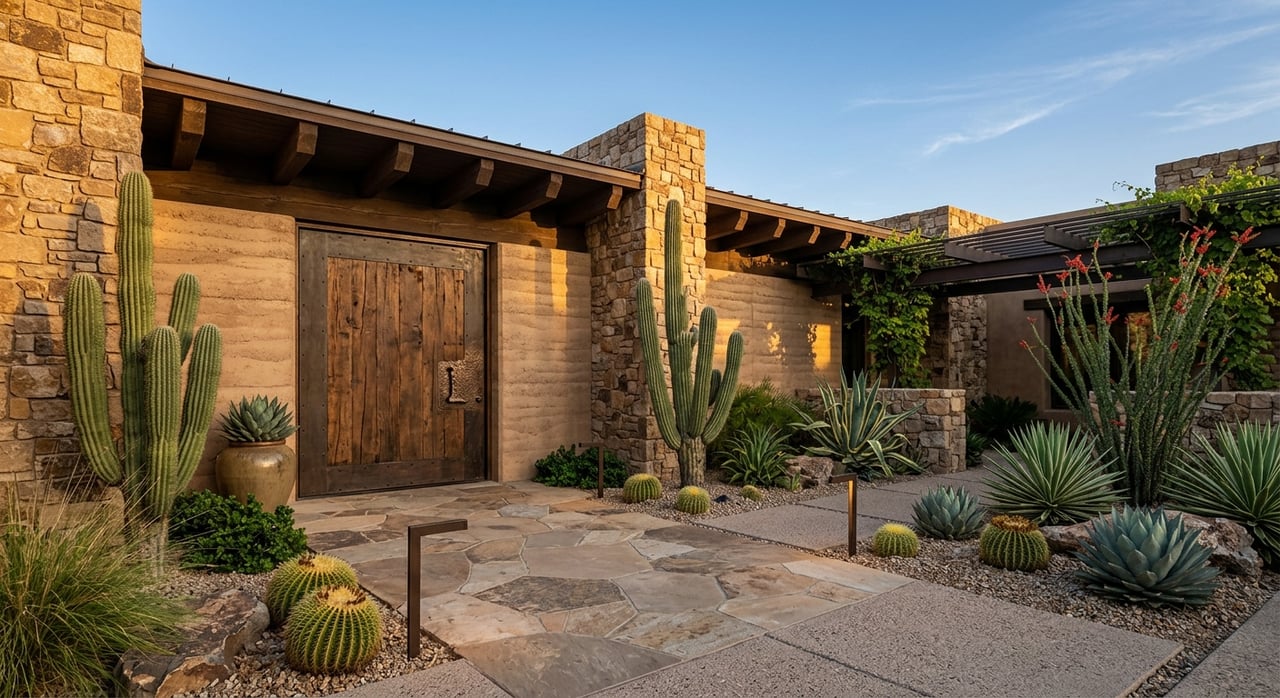
If you own or are watching an estate in Paradise Valley, you already know this is not a market where price is set by square footage alone. Two homes can look similar on paper and still land very differently in the market because buyers at this level are weighing privacy, land utility, views, design, and presentation all at once. If you want to understand how ultra-luxury homes are really priced and sold in Paradise Valley, this guide will walk you through the factors that matter most and what they mean for your next move. Let’s dive in.
Paradise Valley pricing starts with the land
In Paradise Valley, the lot is not just where the home sits. It is a major part of the value story. The Town notes that much of the community is zoned R-43, which generally means one acre per lot, with some other zoning categories also in place.
That matters because buyers are often evaluating what the site allows them to enjoy day to day. A larger parcel can offer more separation, better siting options, and a stronger sense of privacy, but acreage alone does not guarantee a premium. In this market, usable land often matters more than raw lot size.
Site utility matters more than simple acreage
Research on residential land values shows that parcel size and zoning influence value, but the relationship is not perfectly linear. In practical terms, that means a bigger lot is not automatically worth proportionally more. What buyers usually pay for is how well the land functions.
In Paradise Valley, that often includes:
- A better building envelope
- Easier indoor-outdoor flow
- Room for amenities that fit the estate
- More distance from neighboring homes
- A layout that supports privacy and quiet
A one-acre lot with awkward grading, limited usable area, or compromised orientation may not compete with a slightly smaller site that feels more open, private, and functional.
Views, privacy, and orientation shape premiums
At the ultra-luxury level, the view is not a side benefit. It can be a central pricing driver. Scenic-view research summarized by the Appraisal Institute shows that premiums tend to rise as view quality improves, but those premiums are highly site-specific.
That is especially true in Paradise Valley. A clear mountain backdrop, open-space orientation, or golf-adjacent setting can add meaningful appeal when the view corridor is actually open and the home still feels private.
Not all views are equal
Buyers in this segment tend to notice subtle differences quickly. A wide, protected sightline is very different from a partially blocked view or a backyard that looks directly into nearby structures. The same is true for privacy.
A property may offer impressive scale, but if the outdoor areas feel exposed, the pricing power can soften. In contrast, a home with strong orientation, preserved privacy, and a clean visual line often feels more complete, which can support a stronger asking price.
Architecture and condition influence buyer confidence
Design matters in Paradise Valley, but buyers are not paying for labels alone. Reporting on architect-driven premiums shows that a notable architectural pedigree can add value when the design is distinctive, well executed, and scarce. Still, prestige by itself is not enough.
Buyers also want a home that works well in everyday life. That means the floor plan, finish quality, and overall livability all help determine whether a property feels worth the number attached to it.
Turnkey presentation carries weight
At this price point, buyers expect a high level of completeness. They are not just looking for impressive rooms. They are looking for a home that feels cohesive and ready.
That usually includes:
- Strong indoor-outdoor flow
- Well-maintained major systems
- Amenities that match the home’s scale
- Consistent design choices throughout
- A polished, finished feel from arrival to backyard
When a home feels fragmented, dated, or only partially updated, buyers often adjust their offers to reflect the work and uncertainty ahead.
Local rules can affect value and marketability
Paradise Valley has a distinct local framework that helps explain why site design carries so much weight. The Town says its building and zoning regulations may be more restrictive than in other nearby communities. For hillside projects, approval can reach detailed elements such as paint, roofing, outdoor lighting, walls, fences, lot disturbance, and landscaping.
For sellers, this means buyers may look closely at how the home fits the site and how improvements were executed. For buyers, it is a reminder that not every estate parcel offers the same flexibility or development potential, even when the lot size appears similar.
What the current Paradise Valley market suggests
Paradise Valley remains an expensive market, but it is not frictionless. In March 2026, Redfin reported a median sale price of $4.7975 million, 87 median days on market, and 50 homes sold. Realtor.com reported a $4.9925 million median listing price, a 95% sale-to-list ratio, and described the market as balanced.
These sources use different methods, so they should be read as directional rather than identical. Still, together they point to an important takeaway: luxury homes here can sell well, but they still need accurate pricing and thoughtful preparation.
Expect precision, not guesswork
Sellers should not assume a beautiful estate will move quickly just because it is in Paradise Valley. Current snapshots suggest many listings take weeks or months, not days. They also suggest that homes may sell below original asking price when expectations outpace the market.
That is why pricing an ultra-luxury home usually involves more than pulling a few comparable sales. You need to account for lot utility, privacy, orientation, design, condition, and how your property compares with the limited pool of true alternatives.
How ultra-luxury homes are marketed
In this tier, marketing is not just promotion. It is interpretation. Buyers need to understand the property visually and emotionally before they fully understand it analytically.
According to NAR’s 2025 staging study, 83% of buyers’ agents said staging made it easier for buyers to visualize a property as a future home. The same study found that photos, physical staging, videos, and virtual tours were all rated as highly important.
Visual storytelling comes first
For a Paradise Valley estate, the marketing package should help a buyer grasp the property’s strongest value drivers quickly. That includes the lot, the scale, the privacy, the flow, and the view corridor.
In practice, that often means focusing on:
- Professional photography that explains the setting
- Video that captures approach, scale, and outdoor flow
- Staging that helps large spaces feel intentional
- Visual emphasis on privacy and site orientation
- Clear presentation of major living and entertaining areas
If buyers cannot immediately understand what makes the property special, the home may struggle to generate the right response, even if the features are impressive in person.
Public marketing versus quiet selling
Not every Paradise Valley seller wants broad exposure. Some prefer a more private strategy, especially at the top of the market. NAR’s 2025 policy allows for office exclusive and delayed marketing exempt listings, provided the required seller disclosures are completed and MLS rules are followed.
That means a home can be marketed more discreetly, but there are tradeoffs. Limiting public exposure can reduce visibility through MLS-related distribution channels, so the strategy needs to match the seller’s priorities.
Privacy should be planned carefully
A quiet sale can make sense when privacy is the top concern. But sellers should understand that choosing a more limited path may also narrow the buyer pool. The right decision depends on whether your priority is discretion, maximum reach, or a balance of both.
This is where experienced guidance matters. A tailored strategy can help you decide how much exposure supports your goals without creating avoidable compliance issues or missed opportunities.
Documentation still matters in luxury sales
No matter how exceptional the home is, paperwork remains part of the value equation. Arizona buyers are entitled to a Seller’s Property Disclosure Statement, and Arizona sellers must disclose known material facts that affect value when those facts are not readily observable.
For Paradise Valley estates, that can be especially important when a property includes pools, outbuildings, older systems, additions, or major remodels. Clean documentation can help reduce negotiation friction and support buyer confidence.
Organize your file before listing
A strong pre-listing file may include:
- The Seller’s Property Disclosure Statement
- Records of permits and major improvements
- Information on remodels or additions
- Service history for key systems when available
- Notes on material facts a buyer should know
Well-prepared sellers tend to create a smoother path once inspections and negotiations begin.
What sellers should focus on first
If you are preparing to sell an ultra-luxury home in Paradise Valley, the most effective first step is usually not a public launch. It is a clear review of the property’s actual value drivers and likely friction points.
Start by asking:
- How usable is the lot?
- How strong are the privacy and views?
- Does the home feel turnkey?
- Is the asking price grounded in current market behavior?
- Is a public or private marketing strategy the better fit?
With the right guidance, those answers can shape a listing strategy that feels polished, realistic, and competitive from day one.
If you are thinking about selling in Paradise Valley and want a strategy built around pricing precision, high-end presentation, and experienced negotiation, connect with Afshin Sadeghi for tailored guidance.
FAQs
How are ultra-luxury homes in Paradise Valley priced?
- Ultra-luxury homes in Paradise Valley are usually priced based on land utility, privacy, view quality, architecture, condition, amenities, and current market conditions, not square footage alone.
How long does it take to sell a luxury home in Paradise Valley?
- Current market snapshots suggest many Paradise Valley homes take several weeks to several months to sell, with recent reports showing roughly 75 to 87 median days on market.
Can you sell a Paradise Valley estate privately?
- Yes. Paradise Valley sellers can choose privacy-oriented options such as office exclusive or delayed marketing, but those choices require proper seller disclosures and compliance with MLS rules.
What should luxury marketing highlight in Paradise Valley?
- Luxury marketing in Paradise Valley should clearly show the lot, privacy, views, site orientation, architecture, indoor-outdoor flow, and overall presentation through strong visuals and staging.
What disclosures matter when selling a Paradise Valley estate?
- Arizona sellers should prepare a Seller’s Property Disclosure Statement and organize records for known material facts, permits, additions, remodels, pools, outbuildings, and major systems when applicable.
