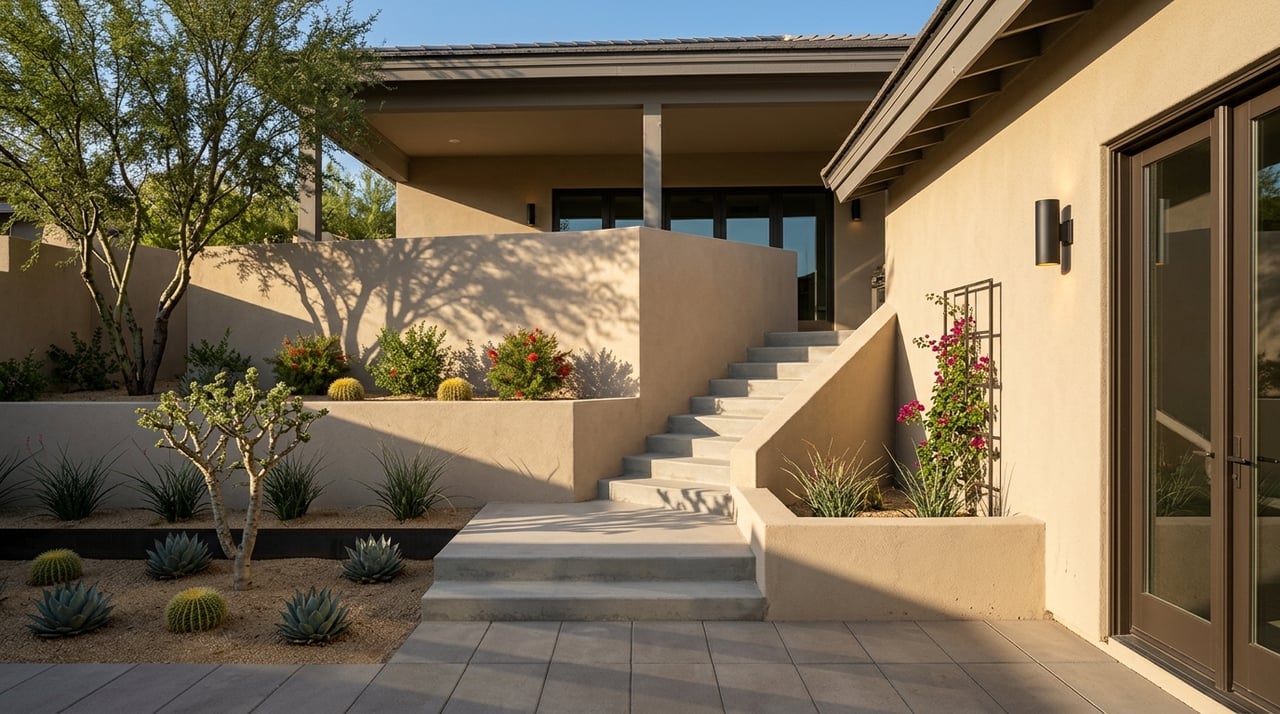
Wondering what it really means to own a home on the hillsides of Fountain Hills? The views can be stunning, but hillside living is about more than a dramatic backdrop. If you are thinking about buying or selling here, it helps to understand how the terrain shapes architecture, outdoor space, privacy, and day-to-day comfort. Let’s dive in.
Why hillside living defines Fountain Hills
In Fountain Hills, the hillsides are not just scenery. They are part of the town’s identity.
The town describes itself as a master-planned community established in 1970, with about 24,000 residents across roughly 24 square miles. It sits among the McDowell Mountains, with elevation rising from about 1,520 feet near the fountain to about 3,000 feet on Golden Eagle Boulevard. That elevation change helps explain why so many homes feel oriented toward views, slopes, and the surrounding desert.
Fountain Park anchors the community with its 64-acre setting and signature fountain, which runs every hour for 15 minutes between 9 a.m. and 9 p.m. According to the town’s general plan, scenic qualities, hillsides, washes, dark skies, wildlife, and view corridors are all valued parts of local life. In other words, if you are considering a hillside home here, you are stepping into a lifestyle that is central to Fountain Hills itself.
What hillside homes often look like
Hillside homes in Fountain Hills often feel more custom and more site-specific than homes on flatter lots. The terrain tends to shape the floor plan, the outdoor areas, and even the way you arrive at the front door.
A local example, the Heselton Home in Crestview Estates, shows how this can work. The home is designed to cascade down a steep hillside lot with a two-story layout, multiple exterior patios, and main living spaces oriented toward mountain views. While every property is different, this example reflects a broader pattern you will often see in Fountain Hills: homes that are terraced, layered, and built to take advantage of elevation.
That can create a very different experience from a flat-lot suburban home. Instead of one simple backyard plane, you may have outdoor spaces arranged across multiple levels. That layout can feel dramatic and visually striking, especially when the home opens toward the mountains or valley below.
How views shape daily life
For many buyers, the biggest draw of a hillside home is the view. In Fountain Hills, that can mean mountain ridgelines, desert terrain, wide sky, or in some areas, a vantage point where the fountain becomes part of the backdrop.
The town’s general plan notes that the fountain is visible from many vantage points and emphasizes the importance of scenic vistas and view corridors. That helps explain why homes on elevated lots can feel so special. The setting is not accidental. It is part of the way the town has planned and protected its visual character.
Still, not every view lot lives the same way. Your experience can depend on neighboring elevation, adjacent vacant land, rooflines, and the exact orientation of the home. If keeping a view matters to you, it is smart to look beyond today’s photo-worthy outlook and ask how the surrounding lots may affect that experience over time.
Outdoor spaces feel more layered
One of the most appealing parts of hillside living is how outdoor space can become an extension of the architecture. On a sloped lot, patios, terraces, and shaded sitting areas often do more work than a standard backyard.
The local hillside example highlights deep overhangs, shaded patios, and strong indoor-outdoor transitions. That approach makes sense in Fountain Hills, where views are a major asset but desert sun is also part of daily life. A well-designed hillside home often tries to balance both.
This can make outdoor living feel more intentional. Rather than a single open yard, you may have separate places to relax, dine, or enjoy the scenery at different elevations. For some buyers, that feels more dynamic and private than a traditional backyard setup.
The trade-offs buyers should expect
The same features that make hillside homes memorable can also make them more complex. If you are shopping in Fountain Hills, it is important to look at the practical side as closely as the view.
Stairs and grade changes are common. A home with multiple levels, split outdoor spaces, or a long stepped entry may be beautiful, but it can also change how the home feels for everyday living. What looks exciting during a showing should still feel comfortable when you picture carrying groceries, hosting guests, or moving through the home every day.
Driveways also deserve attention. On sloped sites, driveway placement and access can be more site-sensitive, and the lot may require a different approach than a home on flatter ground. This is one reason two homes with similar square footage can live very differently in practice.
Usable lot area is another major factor. Fountain Hills’ hillside rules focus on slope and limiting disturbance based on slope severity, so lot size alone does not tell the full story. A larger lot may still have less practical outdoor area than you expect if much of it is steep or constrained.
Why local hillside rules matter
In Fountain Hills, hillside living comes with a clear local planning framework. The town’s subdivision ordinance defines hillside areas as slopes of 20 percent or more, and the purpose of the rules is to limit disturbance based on slope severity.
That matters because it helps shape what can happen on a lot. Grading, driveway placement, and how much of the site is altered all become more important on steeper parcels. The town’s general plan also emphasizes preserving steep slopes, washes, hillsides, and view corridors, while encouraging re-vegetation of disturbed areas with native plants.
For buyers, this means the land itself is part of the decision. You are not only evaluating the home. You are also evaluating how the lot works within local rules and how the site has been designed to fit the terrain.
For sellers, this same context can be a strength. A well-sited home that respects the lot, captures views, and presents the desert setting thoughtfully may stand out more clearly to buyers who understand the appeal of Fountain Hills hillside living.
Neighborhood appearance is part of the lifestyle
In hillside areas, visual order tends to matter more because homes are often seen from multiple elevations and long sightlines. Fountain Hills reinforces that through code-enforcement guidance aimed at preserving neighborhood appearance.
The town says parking in yards is prohibited. It also says RVs and trailers must be stored behind a six-foot solid wall with a view-obscuring gate, and outdoor storage should remain in approved areas. For homeowners, these rules help protect the clean, uncluttered look that many buyers value in view-oriented neighborhoods.
This is not just about compliance. It is part of the overall living experience. When sightlines, curb appeal, and desert views are a big part of what makes a property attractive, neighborhood presentation carries extra weight.
Trail access and open-space feel
Another feature that can appeal to buyers is proximity to trails and open space. Fountain Hills says many McDowell Mountain Preserve trails are adjacent to homes and communities, while asking hikers to respect private property.
That can create an interesting balance. A hillside home may feel tucked away and close to nature, while still being connected to the broader community. Depending on the lot, you may enjoy a sense of privacy and open-space access at the same time.
Of course, the exact experience depends on location. Lot placement, nearby elevation, and the way a home relates to surrounding land can all affect how private or connected the property feels.
Questions to ask before you buy
When you tour a hillside home in Fountain Hills, it helps to go in with a different checklist than you might use on a flatter lot. A few practical questions can give you a clearer picture of long-term livability.
- How much of the lot is truly usable?
- How does the home handle stairs and level changes in daily life?
- What does the driveway feel like coming and going?
- How are patios, terraces, and outdoor areas arranged?
- What nearby lots, rooflines, or building areas could affect the current view?
- How much exterior upkeep may be needed for landscaping, drainage, and screening?
These are not small details. In a hillside setting, they shape how the home functions just as much as the bedroom count or finishes.
What sellers should highlight
If you own a hillside home in Fountain Hills, your property story should go beyond square footage. Buyers are often responding to the full experience of the site.
That includes the way the home captures views, how outdoor areas are layered, and whether the layout feels intentional for the terrain. It also includes practical strengths, such as comfortable access, thoughtful landscaping, and a clean presentation that supports the home’s visual appeal.
This is where local market knowledge matters. When a property has elevation, terraces, grade changes, or custom design features, it helps to present those details clearly so buyers understand not just what the home is, but why it lives differently from a standard flat-lot property.
The bottom line on Fountain Hills hillside homes
Hillside homes in Fountain Hills offer a lifestyle shaped by scenery, custom design, and the land itself. The best ones do more than provide a great view. They turn the slope into part of the living experience through smart orientation, layered outdoor spaces, and a strong connection to the desert setting.
At the same time, hillside living asks you to think carefully about access, usability, maintenance, and local rules. When you understand both the beauty and the trade-offs, you can make a more confident decision. If you are exploring Fountain Hills or preparing to sell a view property, working with someone who understands how terrain affects value and livability can make all the difference.
If you are thinking about buying or selling in Fountain Hills, Afshin Sadeghi can help you evaluate the details that matter most and navigate the process with clear, experienced guidance.
FAQs
What makes Fountain Hills hillside homes different from flat-lot homes?
- Fountain Hills hillside homes often feel more terraced, view-focused, and custom because the terrain shapes the layout, outdoor spaces, and orientation of the home.
What should buyers ask about usable lot space in Fountain Hills hillside homes?
- Buyers should ask how much of the lot is truly usable, because hillside rules and slope conditions can make two similarly sized lots function very differently.
What local rules affect Fountain Hills hillside properties?
- Fountain Hills regulates hillside areas with slopes of 20 percent or more to limit disturbance, and it also enforces rules on yard parking, RV and trailer storage, and approved outdoor storage areas.
Do Fountain Hills hillside homes usually have more stairs and grade changes?
- Yes, many hillside homes include stairs, split levels, stepped entries, or multi-level patios because the architecture is often designed around sloped terrain.
Can a Fountain Hills hillside home be close to trails and open space?
- Yes, the town says many McDowell Mountain Preserve trails are adjacent to homes and communities, so some hillside properties may offer a private feel while still being near trail access.
