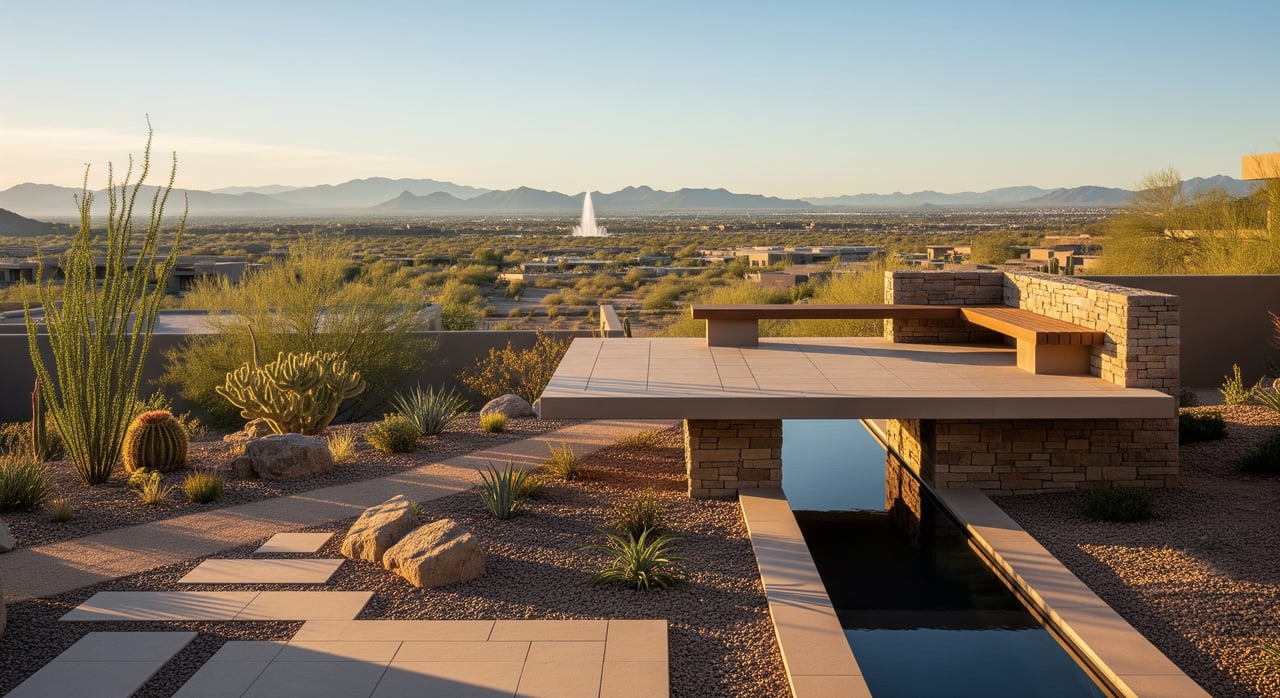
Does a view automatically add dollars to your price tag in Fountain Hills, or is it more complicated? If you are eyeing a lookout lot or preparing to sell a home with mountain or fountain views, you are not alone in asking. Views are an amenity, but buildability and long-term protection of that view can swing value up or down. In this guide, you will learn how appraisers and buyers size up views, what local factors matter most, and how to use a simple worksheet to price a lookout lot with confidence. Let’s dive in.
What “view value” means in Fountain Hills
Views in Fountain Hills come in a few standout types. The most known are direct views of the namesake fountain and park, panoramic looks at the McDowell Mountains or Four Peaks, canyon or ridgeline vistas, and nighttime city or valley lights. Each type draws a different buyer response based on rarity, quality, and how well it fits daily living.
You will see a premium only when buyers perceive clear, lasting benefits. A broad, unobstructed view from your main living areas can be far more valuable than a small slice of scenery from a back corner of the yard. Rarity, scope, and permanence all influence how strong that premium can be.
How appraisers measure view premiums
Sales comparison and paired sales
For typical single-family homes, appraisers rely on the Sales Comparison Approach. They locate recent, nearby sales that are similar except for the view. When they can find paired sales, they isolate the contributory value of the view as a dollar or percentage adjustment. If clean pairs are scarce, they still document adjustments using market-supported evidence and clear narrative.
What gets measured
Appraisers and agents focus on several specifics. They consider view type and overall desirability, the likelihood it will remain, and whether you can enjoy it from primary living spaces like the kitchen, living room, or the main bedroom. They also look at scope and quality, the angle and distance to focal points, rarity in the local market, and the strength of comparable sales data.
Why there is no universal percentage
There is no one-size-fits-all number for a view premium. In practice, adjustments can range from small to double-digit percentages depending on local scarcity and quality. What matters most is recent Fountain Hills and Maricopa County sales data that reflect similar view attributes and lot conditions.
Buyer psychology and market dynamics
A great view triggers both emotional and practical reactions. Some buyers will stretch for a special view, but the pool narrows at higher prices and for steep hillside builds. Liquidity matters, since a highly customized home tied to a niche view can take longer to resell.
Market conditions also shape results. In a seller’s market, more of the view premium may show up in the final price. In a cooler market, buyers apply stricter math and discount for buildability challenges and long timelines.
The trade-offs on lookout lots
Lookout lots often sit on steeper terrain. That can mean grading, retaining walls, engineered foundations, and more complex drainage plans. Long or steep driveways and utility runs can add cost and maintenance.
Regulations play a role too. Setbacks, view corridors, easements, and HOA rules can limit building height, materials, and landscaping, which can affect both usability and sightlines. The right way to think about value is simple: view benefit minus added site costs and risks.
Pricing a lookout lot step by step
Define the view precisely. Identify type, where it is visible from inside the home or building pads, and how likely it is to remain.
Gather recent comps. Look for closed sales in Fountain Hills with similar view quality, ideally paired examples with and without that view.
Adjust for site differences. Compare slope, usable pad size, access, utilities, and zoning. Translate development needs into dollar adjustments.
Estimate the view premium. Create a low-likely-high range based on what the comps support, not a fixed percentage.
Subtract site costs. Deduct realistic grading, foundation, driveway, and utility costs to estimate the net benefit to a buyer.
Market-test. Use targeted marketing like drone and twilight photography and track feedback and days on market to validate your price.
Get a focused appraisal. Ask for view-specific support and documentation to strengthen your pricing or offer strategy.
Fountain Hills valuation factors checklist
Use this worksheet to score a lot or home and create a data-backed narrative. Rate each factor from 1 to 5, multiply by the suggested weight, and add up your total.
| Factor | Short description | Rating (1–5) | Evidence/data needed | Suggested weight (0–100) | Dollar adjustment note |
|---|---|---|---|---|---|
| View type | Fountain, mountain, canyon, city lights | Photos, line-of-sight maps | 15–25 | Note market-supported range | |
| Permanence | Likelihood of future obstruction | Zoning, permits, nearby plans | 15 | Add or reduce based on risk | |
| Primary visibility | Seen from living, kitchen, main bedroom | Floor plans, interior photos | 10 | Higher if from multiple main rooms | |
| Scope and quality | Panoramic vs partial, elevation | Wide-angle photos, elevation | 10 | Scale with breadth and clarity | |
| Rarity | Few similar views in recent sales | Sales count over 12–36 months | 10 | Adjust for scarcity | |
| Buildability | Slope, usable pad, retaining walls | Topo survey, grading estimate | 15 | Deduct realistic site costs | |
| Access and utilities | Driveway complexity, utility runs | Utility maps, builder bids | 10 | Price in installation and upkeep | |
| Rules and easements | Zoning, HOA, recorded easements | Title, CC&Rs, zoning map | 5 | Adjust for limits on height or use | |
| Market conditions | Current supply-demand for view lots | DOM and pending data | 10 | Adjust for liquidity risk |
How to use it:
- Score each factor 1 to 5. Multiply by the weight and sum the results to get a composite view utility score.
- Group totals into tiers and align each tier with premium bands from your local comps.
- Convert the premium to a dollar figure supported by paired sales. If data is thin, present a range with clear assumptions.
From score to price strategy
Preferred practice is to express your adjustment in dollars, not a blanket percentage. Look for two similar sales within a tight radius and time frame, one with the view and one without. Use that evidence to set a tight range for your premium.
If data is limited, provide low-typical-high scenarios with transparent assumptions about marketability and site costs. A clear narrative backed by comps will hold up better during appraisal and negotiation.
Seller moves that protect your premium
- Order a pre-list site analysis with a survey and topographic details so buyers understand buildability.
- Invest in drone and twilight photography to convey scope, quality, and nighttime city lights when relevant.
- Obtain a pre-list appraisal or a written opinion focused on view valuation and paired sales.
- Get builder ballparks for grading, foundation, driveway, and utility work to answer cost questions upfront.
Buyer moves to get the math right
- Ask for recent comps with documented view attributes and study how the broker or appraiser supported adjustments.
- Commission site studies like a survey and geotechnical review to confirm pad size and foundation needs.
- Use contingencies related to view preservation if there is a risk of future obstruction.
- Budget for site work based on written estimates, not assumptions.
Common pitfalls to avoid
- Assuming any view equals a large premium. Quality, permanence, and primary-room visibility matter most.
- Ignoring build costs on a steep lot. These can offset much or all of the view premium.
- Over-indexing on a niche view that only a small buyer pool values. Liquidity affects resale.
- Skipping a view-focused appraisal or going to market without strong photography.
Ready to price your view?
If you want a clear, evidence-based strategy for a Fountain Hills lookout lot, you deserve a local advisor who pairs method with marketing. I will help you define the view, back up your number with comps, and present the property to the right buyers. Reach out to Afshin Sadeghi to start your plan today.
FAQs
How much do views add in Fountain Hills?
- There is no universal number, since premiums depend on view type, permanence, buildability, and recent local paired sales.
What if my view might be blocked later?
- Treat blocking risk as a value drag, and verify nearby permits, zoning, and recorded plans to document permanence.
Do appraisers value city lights differently from mountains?
- Yes, appraisers look at market support for each view type, using recent comps that show what buyers actually paid.
Are hillside build costs worth it for resale?
- Only if the net of view premium minus site and foundation costs yields a strong result while keeping a healthy buyer pool.
How should I market a view home or lot?
- Use drone and twilight photography, highlight permanence and primary-room visibility, and support pricing with paired sales.
